

Our Psychiatry Philosophy
At Spark & Steel Mental Health, we believe effective psychiatric care begins with understanding the whole person and not simply identifying a diagnosis or treating a list of symptoms. Mental health is shaped by the complex interaction of biological, psychological, social, medical, and environmental factors, and thoughtful treatment requires considering how these factors may be affecting the way you feel, function, and experience everyday life.
Our approach begins with a comprehensive assessment of your current symptoms and concerns, while also considering your personal and family history, previous treatment experiences, physical health, medications, sleep, stressors, relationships, daily functioning, and individual goals. Looking at the broader clinical picture allows us to develop a more informed understanding of what may be contributing to your symptoms and what treatment options may be appropriate.
Our philosophy is grounded in clinical expertise, evidence-based practice, compassionate care, and shared decision-making. Rather than taking a one-size-fits-all approach, we work collaboratively with you to discuss treatment options, expected benefits, potential risks and side effects, and reasonable alternatives so that you can make informed decisions about your care.
When medication is appropriate, our goal is not simply to prescribe—it is to use medication thoughtfully and purposefully as part of an individualized treatment plan. Depending on your needs, care may also include psychotherapy, behavioral and lifestyle interventions, coordination with other healthcare professionals, or further medical evaluation when clinically indicated.
Treatment is continually evaluated over time. We monitor symptom response, tolerability, functioning, and progress toward your goals, making adjustments, when necessary, as your needs change.
Ultimately, our goal is to provide psychiatric care that helps you better understand your mental health, participate actively in treatment decisions, achieve greater emotional stability and daily functioning, and build a foundation for sustainable long-term well-being.
Our Approach to Psychiatric Care

Compassionate Care
Care grounded in trust, respect, and understanding.
Mental health is influenced by biological, psychological, social, and environmental factors. We consider the broader picture of your health and daily life, with treatment focused not only on symptom improvement, but also on functioning, resilience, and quality of life.

Individualized Treatment
Treatment recommendations tailored to your needs and goals.
We create a supportive environment grounded in empathy, respect, and understanding, recognizing the importance of trust and meaningful therapeutic relationships.

Evidence-Based Practice
Clinical expertise informed by current research and established standards of care.
We integrate current clinical evidence, established treatment guidelines, and professional judgment when evaluating treatment options. Recommendations are discussed collaboratively so you can make informed decisions about your psychiatric care.

Whole-Person Wellness
Looking beyond symptoms to support functioning and overall well-being.
Your symptoms, history, health, lifestyle, preferences, and personal goals are considered when developing treatment recommendations. Care is individualized rather than based on a one-size-fits-all approach.

Our Psychiatry Services
Psychiatric care begins with understanding the full picture of your mental health. Through comprehensive assessment, thoughtful treatment planning, medication management when appropriate, and ongoing follow-up, we provide evidence-based care designed around your individual needs, experiences, and goals.

Psychiatric Evaluations
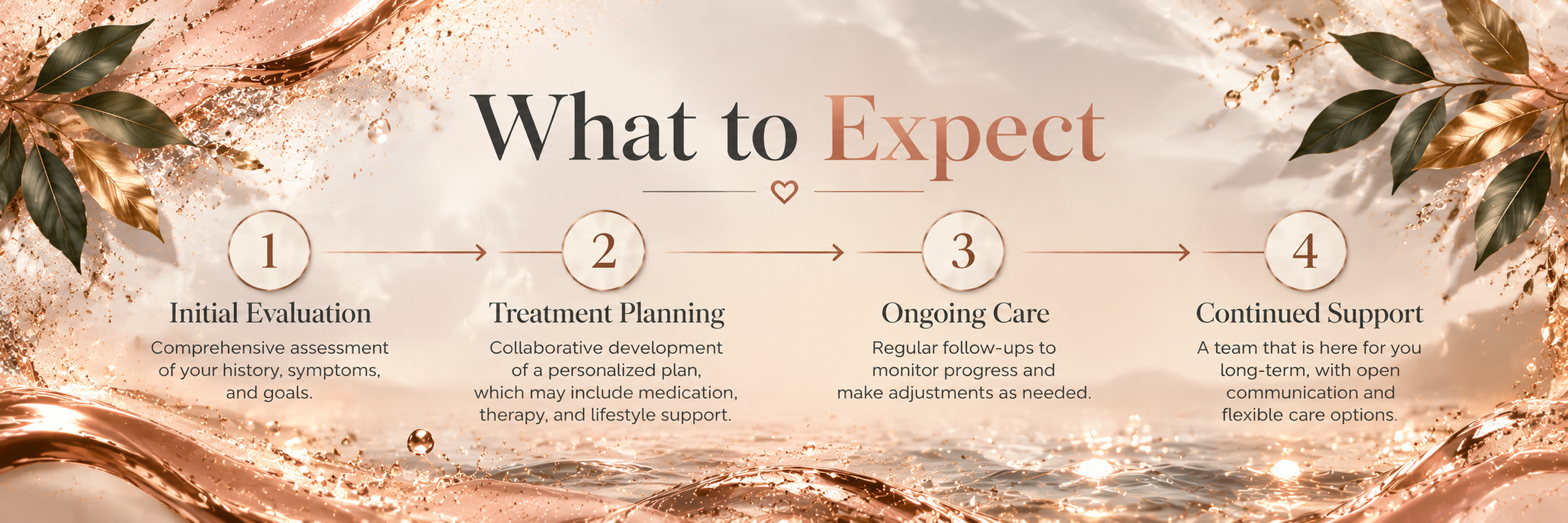
A comprehensive psychiatric evaluation is an important first step in understanding your mental health and determining what type of care may be most appropriate. The evaluation provides an opportunity to look beyond individual symptoms and develop a more complete understanding of what you are experiencing.
During your evaluation, we explore current concerns and symptoms, psychiatric and medical history, sleep, mood, attention and concentration, daily functioning, relationships, life experiences, and other factors that may be affecting your well-being.
Using this information, your provider works with you to clarify diagnostic considerations, identify factors that may be contributing to your symptoms, and discuss appropriate treatment options. The goal is to develop a thoughtful, individualized plan based on your needs, experiences, preferences, and treatment goals.

Medication Management
Psychiatric medication management involves more than prescribing medication. It is an ongoing process of evaluating whether medication may be appropriate, monitoring how treatment is working, assessing potential side effects, and making adjustments when clinically indicated.
Medication recommendations are based on a careful review of your symptoms, medical and psychiatric history, previous treatment experiences, current medications, lifestyle, and individual preferences. Your provider will discuss the potential benefits, risks, expected effects, and available alternatives so you can make informed decisions about your care.
When medication is part of treatment, the goal is to use it thoughtfully and collaboratively while continually evaluating its effectiveness, tolerability, and role within your overall treatment plan.

Psychiatric Follow-Up Visits
Mental health treatment often changes over time. Regular follow-up visits allow you and your provider to evaluate progress, discuss new or ongoing concerns, and determine whether your treatment plan continues to meet your needs.
During follow-up appointments, your provider may review changes in mood, anxiety, sleep, attention and concentration, medication response, side effects, daily functioning, and other areas relevant to your treatment. These visits also provide an opportunity to discuss questions, concerns, or changes in your circumstances.
Based on your progress and response to treatment, recommendations may be continued or adjusted as clinically appropriate. Ongoing follow-up helps ensure that care remains safe, responsive, and aligned with your treatment goals.

Collaborative Psychiatric Care
Mental health is influenced by many interconnected factors, including biology, emotions, relationships, life experiences, physical health, environment, and current stressors. Effective psychiatric care considers these factors together rather than focusing on symptoms in isolation.
At Spark & Steel Mental Health, we value communication and collaboration across your care team. With your consent and when clinically appropriate, psychiatric providers and therapists can coordinate care to support shared treatment goals and a consistent approach to your mental health needs.
This collaboration can help connect medication management, psychotherapy, behavioral strategies, and other aspects of treatment while ensuring that each remains responsive to your individual needs and goals.


Conditions We Treat
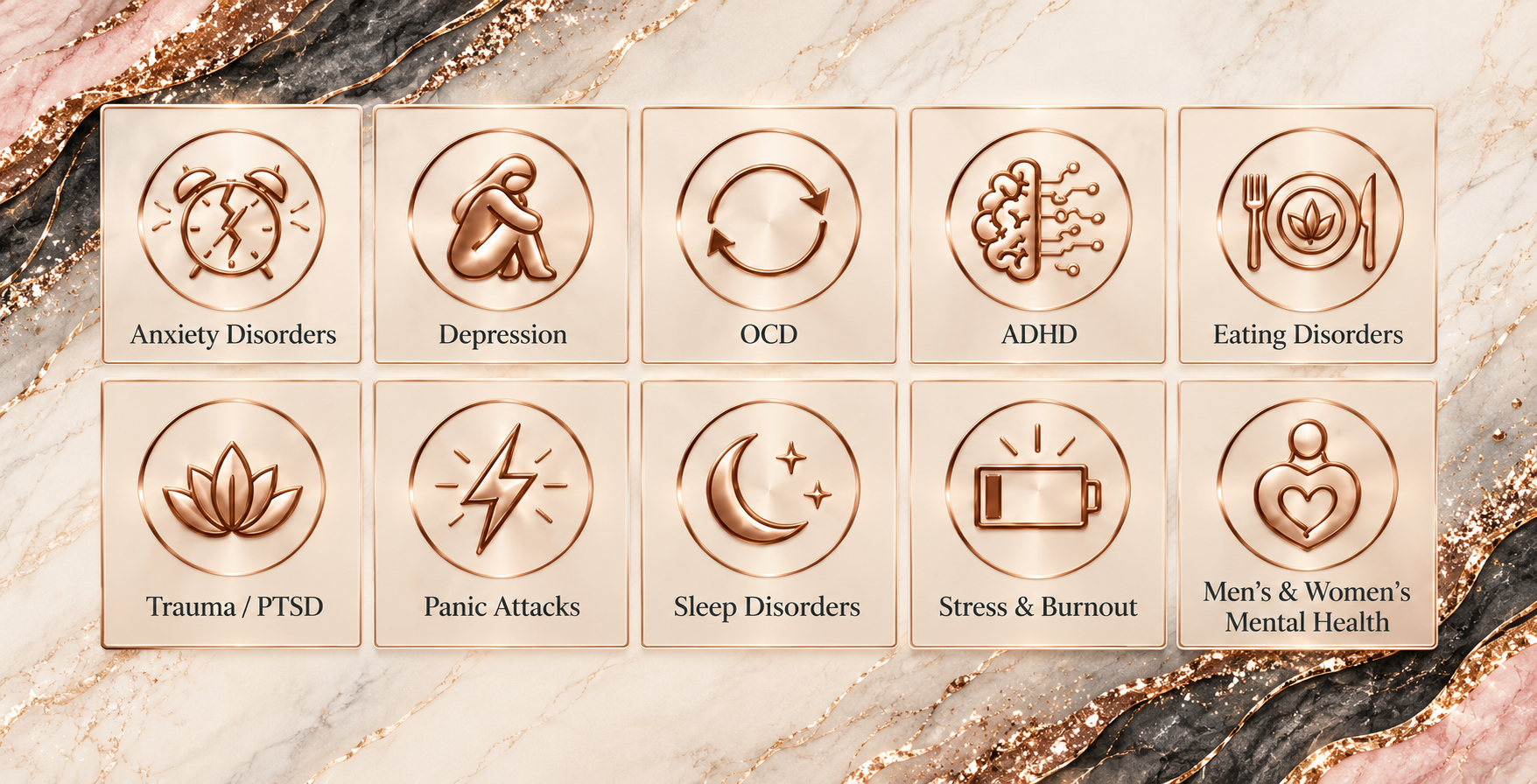
Mental health conditions are complex and often extend beyond a single symptom or diagnosis. Changes in mood, thought patterns, attention, sleep, emotional regulation, behavior, and daily functioning can emerge in different ways, and similar symptoms may occur across multiple psychiatric conditions.
At Spark & Steel Mental Health, we approach diagnosis with clinical precision and a comprehensive understanding of the individual. Psychiatric symptoms may be influenced by biological and neurological factors, medical history, genetics, life experiences, environmental stressors, and co-occurring conditions. Understanding how these elements intersect is essential to developing an accurate clinical picture.
Our psychiatric providers use comprehensive evaluation and evidence-based diagnostic practices to identify meaningful patterns, consider overlapping or co-occurring conditions, and determine the factors most relevant to your presentation. This thoughtful approach informs personalized treatment recommendations designed to support symptom improvement, greater stability, and stronger functioning across the areas of life that matter most to you.
Beyond the Diagnosis
Mental health does not always fit neatly within the boundaries of a single diagnosis. Some individuals experience significant emotional distress, changes in functioning, or persistent symptoms without meeting the full criteria for a specific psychiatric condition. Others experience overlapping concerns shaped by multiple clinical, medical, developmental, or situational factors.
Psychiatric care may also address concerns that extend beyond traditional diagnostic categories. Emotional dysregulation, grief and loss, body image concerns, major life transitions, performance-related pressures, hormonal changes, chronic stress, sleep disruption, and physical health conditions can all influence mood, cognition, behavior, and emotional well-being.
At Spark & Steel Mental Health, we consider the broader clinical picture. Rather than allowing a diagnosis alone to define treatment, we examine symptom patterns, severity, functional impact, medical and psychiatric history, contributing factors, and the relationship between mental and physical health. This comprehensive perspective allows us to develop treatment recommendations that reflect the complexity of each person's presentation and the areas of life most affected.
Because exceptional psychiatric care is not simply about identifying a diagnosis—it is about understanding the person, the patterns, and the factors shaping their experience.
When to Consider Psychiatric Care
Recognizing when psychiatric care may be helpful is not always clear. Changes in mood, sleep, concentration, motivation, emotional regulation, or daily functioning can emerge gradually, fluctuate over time, or become more pronounced during periods of stress, transition, or increased demands.
A psychiatric evaluation may be appropriate when these changes persist, become increasingly difficult to manage, or begin affecting relationships, work or school performance, physical well-being, or the ability to navigate everyday responsibilities. Evaluation can also be valuable when symptoms are difficult to understand, previous treatment has not provided sufficient improvement, or there are questions about whether medical, psychiatric, or other factors may be contributing.
Seeking psychiatric care does not mean that medication will automatically be recommended. A comprehensive evaluation is designed to clarify what may be contributing to your concerns and determine which treatment options are most appropriate. Recommendations may include psychotherapy, medication when clinically indicated, behavioral or lifestyle interventions, coordination with other healthcare professionals, further medical evaluation, or a combination of approaches.
The purpose of psychiatric care is not simply to treat symptoms, but to understand what is driving them and determine the most appropriate path forward.


Mental health is shaped by more than symptoms alone. Physical health, emotional experiences, relationships, environment, lifestyle, and the demands of everyday life can each influence how a person thinks, feels, responds, and functions.
At Spark & Steel Mental Health, we take a whole-person approach to psychiatric care. We recognize that individuals with similar symptoms or diagnoses may have very different experiences, circumstances, and treatment needs. Understanding those distinctions allows care to be guided not only by clinical evidence, but also by each person's history, priorities, preferences, and goals.
Our focus extends beyond reducing symptoms. We strive to help individuals achieve greater stability, strengthen daily functioning, and experience meaningful improvements in the areas of life most important to them. Treatment is approached as an evolving process—thoughtfully developed, regularly evaluated, and refined as needs and goals change over time.
Care should be clinically sound, deeply individualized, and designed to support the person as a whole.
Meet Our Psychiatry Team

Ashley Castaneda APRN, MSN, PMHNP-BC
Ashley is a board-certified Psychiatric Mental Health Nurse Practitioner and Co-Founder of Spark & Steel Mental Health, providing comprehensive psychiatric care for individuals ages 10 and older. Her clinical practice includes the evaluation and treatment of anxiety, depression, obsessive-compulsive disorder (OCD), post-traumatic stress disorder (PTSD), bipolar disorder, eating disorders, and a range of other psychiatric concerns.
Ashley approaches psychiatric care with an emphasis on thoughtful assessment, evidence-based treatment, and individualized clinical decision-making. She values collaboration and open communication, working alongside each individual to develop a treatment plan that reflects their needs, experiences, and goals. Her approach extends beyond symptom management, with a focus on supporting greater stability, improved functioning, and meaningful progress in everyday life.g.

Valan Kim APRN, MSN, PMHNP-BC
Valan is a board-certified Psychiatric Mental Health Nurse Practitioner providing psychiatric care for children, adolescents, and adults across a broad range of mental health concerns. Her approach is grounded in thoughtful assessment, evidence-based treatment, and a genuine commitment to understanding each individual’s experiences, needs, and goals.
Valan places particular emphasis on active listening and collaborative care, creating an environment where individuals feel comfortable asking questions, discussing concerns, and participating meaningfully in treatment decisions. She values the therapeutic relationship as an important part of psychiatric care and works to develop treatment plans that are both clinically informed and individualized.
Her goal is to help each person better understand their mental health, feel confident in their care, and make meaningful progress toward greater stability, improved functioning, and overall well-being.
Frequently Asked Questions
-
Your initial psychiatric evaluation is an opportunity to develop a comprehensive understanding of your current concerns and overall mental health. Your provider will review your symptoms, medical and psychiatric history, previous treatment experiences, medications, daily functioning, and other factors that may be contributing to what you are experiencing. The appointment also provides time to discuss your questions, concerns, and treatment goals. Based on the evaluation, your provider will review their clinical impressions with you and discuss appropriate next steps, which may include medication, psychotherapy, additional assessment, coordination with other healthcare professionals, or a combination of approaches. The goal is to ensure you leave with a clearer understanding of your care and a thoughtful plan for moving forward.
-
Not necessarily. Medication is recommended only when your provider determines that it is clinically appropriate based on a comprehensive evaluation of your symptoms, medical and psychiatric history, previous treatment experiences, current medications, and individual needs. If medication is being considered, your provider will discuss the available options with you, including the potential benefits, risks, side effects, alternatives, and what you can reasonably expect from treatment. You will have an opportunity to ask questions and discuss any concerns or preferences before decisions are made. Treatment is a collaborative process, and medication—when appropriate—is one of several options that may be considered as part of your overall care plan.
-
The timeline for experiencing improvement varies depending on the medication, the symptoms or condition being treated, and each person’s individual response. Some medications may begin producing noticeable changes relatively quickly, while others require several weeks of consistent use before their full therapeutic benefit can be evaluated. Your provider will discuss what to expect when starting a medication, including the anticipated timeline for improvement, potential side effects, and which changes to monitor. Follow-up appointments allow your provider to assess your response, address concerns, and determine whether adjustments are clinically appropriate. Finding the right medication and treatment approach can take time, and ongoing monitoring is an important part of ensuring treatment remains safe, effective, and appropriate for your needs.
-
If your medication does not seem to be providing the expected benefit, or if you are experiencing side effects, your provider can reassess your treatment and determine what may be contributing. This may include reviewing your symptoms, medication response, side effects, adherence, dosage, length of treatment, other medications, and relevant medical or lifestyle factors. Depending on your individual response, your provider may discuss adjustments to your current treatment, alternative medications, additional therapeutic approaches, or further evaluation when appropriate. Finding an effective treatment plan can sometimes require thoughtful adjustments over time. Do not stop, change, or adjust the dose of a prescribed psychiatric medication without first discussing it with your prescribing provider, as some medications require gradual changes or additional monitoring.
-
The frequency of follow-up appointments is individualized and depends on several factors, including your symptoms, the medication being prescribed, your response to treatment, potential side effects, and overall treatment stability. Appointments are often scheduled more frequently when beginning a new medication or making treatment adjustments so your provider can closely monitor your response and address any concerns. As treatment becomes more established and symptoms remain stable, follow-up visits may be scheduled at longer intervals when clinically appropriate. Your provider will recommend a follow-up schedule based on your individual needs, with the goal of maintaining safe, effective, and responsive psychiatric care.
-
Absolutely. You can continue working with your current therapist while receiving psychiatric services at Spark & Steel Mental Health. In many cases, psychotherapy and psychiatric care complement one another, with each addressing different aspects of your mental health and treatment goals. With your authorization, your psychiatric provider can communicate and collaborate with your therapist when clinically appropriate. This coordination can help ensure that important information is shared, treatment recommendations are aligned, and each member of your care team has a more complete understanding of your progress and needs. You are not required to receive therapy at Spark & Steel Mental Health in order to receive psychiatric care with our providers.
-
Not necessarily. The length of time someone may benefit from psychiatric medication varies based on the condition being treated, symptom history and severity, previous episodes, response to treatment, and individual clinical needs. Throughout treatment, your provider will periodically reassess how well the medication is working, whether it remains necessary, and whether your treatment goals or circumstances have changed. For some individuals, longer-term medication management may provide continued benefit, while for others, reducing or discontinuing medication may eventually be appropriate. When a medication can be safely reduced or discontinued, your provider will work with you to develop an appropriate plan. Some psychiatric medications should be decreased gradually and monitored carefully, so medication should not be stopped or adjusted without guidance from your prescribing provider.
-
Yes. Spark & Steel Mental Health provides psychiatric care for children, adolescents, and adults, with age eligibility varying by provider. Psychiatric care for children and adolescents requires careful consideration of developmental stage, emotional and behavioral functioning, family dynamics, school experiences, medical history, and other factors that may influence a young person's mental health. Our providers take an individualized approach to assessment and treatment, recognizing that the needs of younger individuals may differ significantly from those of adults. Parents and caregivers are appropriately involved in the treatment process while also creating space for children and adolescents to feel heard and engaged in their own care. Treatment recommendations are developed collaboratively, with consideration for the young person's clinical needs, developmental level, family perspectives, and treatment goals.
Insurance & Getting Started
We accept most major insurance plans and are happy to verify your benefits before your appointment. Our team will guide your through the intake process, answer any questions you may have, and make scheduling simple.